

Locating an existing cesspool ahead of a system upgrade.
A large share of Suffolk County homes are not on a sewer. They are on cesspools or septic systems, discharging into the ground above the aquifer that supplies the drinking water for everyone on the Island. That fact is the reason the rules have been tightening, and it is why this is worth understanding before you are forced to.
Which do you have?
A traditional cesspool is a single pit that receives everything and lets liquid seep out through its walls. A septic system separates solids in a tank first, then distributes the liquid to a leaching field. Septic is meaningfully better; a modern nitrogen-reducing system is better again.
If you do not know which you have, your county property file usually does, and we can locate and inspect the system in a single visit.
Signs your system is failing
Slow drains throughout the house rather than at one fixture.
Standing water or an unusually lush green patch over the system.
Sewage odor in the yard, particularly after heavy rain.
Backups that clear briefly after pumping and then return within weeks.
Needing to pump far more often than you used to.
The rules are not what they were
Suffolk County has moved steadily toward requiring modern nitrogen-reducing technology when a system is replaced, along with specific setbacks from wells, property lines and groundwater. Grant programs have existed to offset the cost, and availability shifts, so it is worth checking what is open before you commit to anything.
Check for a sewer main first
If a sewer main has gone into your street — and they have gone into a lot of streets in the last decade — connecting is almost always the better long-term decision than replacing an on-site system. We check availability before quoting anything else.
Keeping the system you have alive
Pump every three to five years depending on household size. Keep vehicles off the leaching field, since compacted soil stops it working. Do not put grease, wipes, cat litter or paint down any drain. Spread laundry across the week rather than running eight loads on a Saturday, because a sudden hydraulic load pushes solids into the field.
And skip the additives sold as septic treatments. A healthy system already contains the bacteria it needs, and some additives actively harm the field.
Ray Flowers
Flow’s Plumbing has served Long Island since 2004. If this is happening at your house, give us a call.
Call and speak to someone who works here. Average response across Nassau and western Suffolk is about 90 minutes.
Homeowner guides
More From the Crew

Waterproofing
7 min read
Why Long Island Basements Flood — and How to Actually Stop It
High water table, sandy soil and roof water landing at the foundation. Three causes, and only one of them needs a pump.
Read article

Maintenance
6 min read
Hard Water on Long Island: What It Is Doing to Your Pipes
The white crust on your showerhead is the visible part. The expensive part is happening inside your water heater.
Read article
Water Heaters
8 min read
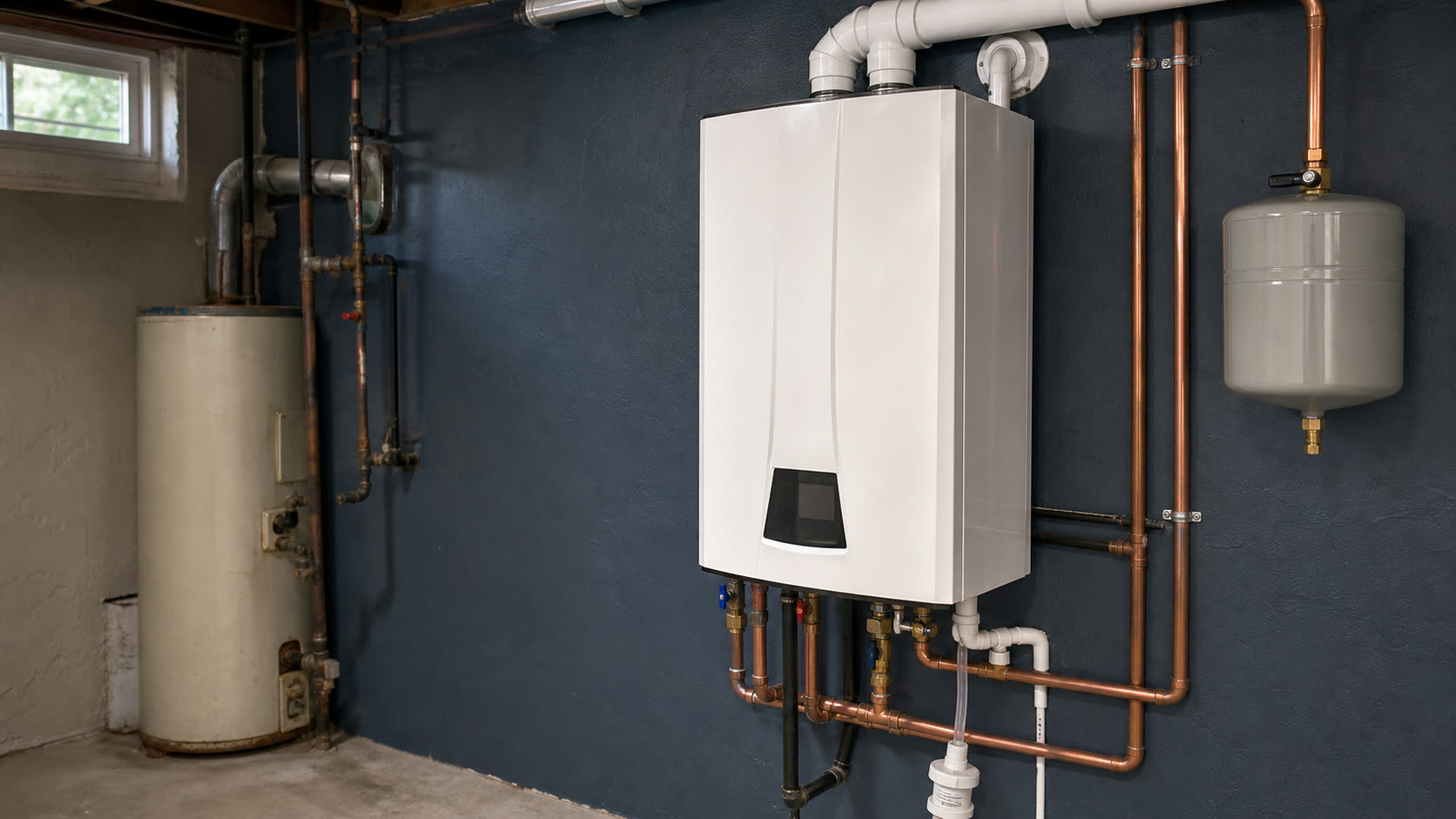
Tankless vs. Tank: Which Makes Sense for a Long Island Home
Tankless is better technology. That does not automatically make it the better purchase for your house.
Read article
Quick quote
Tell Us What It Is Doing. We Will Tell You What It Costs.
Every request gets a real answer from a real plumber within one business day. Some jobs need us to come and look first — if yours does, we will say so rather than guessing at a number.